Source Customized Storage Marble Table for Living Room, Hotel, Office
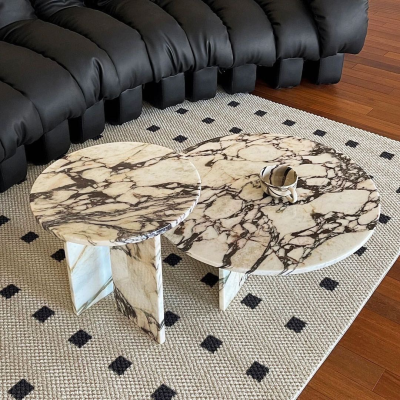
Compare 30 listings for customized storage marble table options featuring marble or sintered stone tops with metal legs. Buyers can evaluate modern designs suitable for living rooms, hotels, and offices with varying sizes and customization availability.
Key considerations
Products List


Comprehensive Sourcing Guide
Strategic Sourcing Guide for Customized Storage Marble Tables
The global market for high-end residential and commercial furniture has seen a significant shift toward durable, aesthetically striking, and functional pieces. Among these, the customized storage marble table has emerged as a premium category, blending the natural elegance of stone with the practical necessity of integrated storage solutions. For procurement professionals and business buyers, navigating this sector requires a disciplined approach that balances material science, manufacturing capabilities, and supply chain reliability. This guide provides a comprehensive framework for sourcing these specialized items, grounded in verified product attributes and industry best practices.
Understanding Material Composition and Structural Integrity
The foundation of any high-quality marble table lies in its material selection. In the current market, the "Table Top" is frequently described using a composite of options including Sintered Stone, Marble, and Wood. Sintered stone offers exceptional resistance to heat, scratches, and staining, making it a robust alternative to natural stone. However, when the specific requirement is "Marble," buyers must understand that this material varies significantly in porosity and hardness depending on the geological source. The product data indicates that "Top Material" can also include "Slab Cladding," suggesting that some manufacturers may offer veneer applications over a substrate rather than solid stone slabs.
Structural integrity is equally critical. The "Leg Material" is often specified as Metal, Iron, Stainless Steel, Aluminum, or Steel. A common high-confidence observation in this category is the use of "1.2mm Thickness Metal Powder Coated Leg and Frame." This specific thickness provides a balance between load-bearing capacity and aesthetic slimness. The "Leg" and "Frame" are typically treated with powder coating to prevent corrosion, which is essential for longevity in environments with varying humidity levels. The "Shape" of the table is a key customization variable, with observed options ranging from "Rectangle," "Oval," and "Square" to more complex configurations. Buyers must verify that the structural frame is engineered to support the specific weight of the chosen stone top, particularly when the design includes "Storage" elements which add internal weight and complexity.
Technical Specifications and Customization Parameters
Customization is a primary driver in this sector, with the attribute "Customization: Available" and "Customized: Customized" appearing frequently in product listings. This allows buyers to tailor dimensions, finishes, and storage configurations to specific interior design requirements. The "Size" and "Standard" dimensions vary widely, with observed specifications including "1200650730mm" for standard dining or side tables, and larger configurations like "L16002000W800*1200mm" for expansive dining setups. The "Model Number" serves as a unique identifier for these custom configurations, with examples such as "JXT222," "1980B-1," "1058B," and "769B" indicating distinct design iterations.
When sourcing for "Storage," the internal mechanics become a critical technical specification. While the provided data highlights "Storage" as a functional requirement, the specific mechanism (drawers, shelves, or lift-top) must be verified during the supplier engagement phase. The "Folded" attribute is noted as "No" or "Unfolded," indicating that these are typically static, permanent fixtures rather than collapsible furniture. The "Rotary" attribute is listed as "Fixed," confirming that the table does not feature rotating bases, which simplifies the structural engineering but requires careful floor space planning. Buyers should request detailed CAD drawings that explicitly show the storage cavity dimensions and the load-bearing capacity of the internal shelving, ensuring that the "Metal" frame can accommodate the added weight of stored items without compromising the stability of the marble top.
Compliance, Certification, and Quality Assurance
In the B2B procurement of stone and metal furniture, verifying compliance and certification is non-negotiable. The product data explicitly lists "SGS" and "ISO9001" as available certificates. SGS is a globally recognized inspection, verification, testing, and certification company, and its presence suggests that the manufacturer undergoes third-party quality checks. ISO9001 indicates that the supplier adheres to international standards for quality management systems, which is crucial for maintaining consistency across large orders.
Buyers must also be aware of potential material-specific standards. While the provided text mentions "CE" and standards such as "EN 12057" and "EN 12058" in a low-confidence background context, these should not be assumed as automatically met by every listed product. Instead, procurement teams should explicitly request current test reports for the specific batch of marble and metal components. For stone materials, verifying the compressive strength and flexural strength is essential to prevent cracking under load. For metal components, verifying the thickness of the powder coating and the corrosion resistance of the steel or aluminum is necessary. The "Warranty" period is another critical metric, with "3 Years" being a common offering in this sector. This warranty should cover both the structural integrity of the metal frame and the surface finish of the stone or sintered stone top.
Cost Drivers and Pricing Dynamics
The pricing of customized storage marble tables is influenced by a complex interplay of factors. The observed price range in the market spans from $30 to $5,000 USD, reflecting the vast difference between basic models and high-end, fully custom designs. The primary cost driver is the material: natural marble is significantly more expensive than sintered stone or wood alternatives. The thickness of the stone slab, the rarity of the stone pattern, and the complexity of the cutting and polishing required all contribute to the final unit cost.
Labor costs are another significant factor. The "Customized" nature of these products means that each unit may require unique fabrication steps, including custom welding of the metal frame, precise cutting of the stone, and the installation of storage mechanisms. The "MOQ" (Minimum Order Quantity) ranges from 1 to 500 units, offering flexibility for both single-item purchases and large commercial projects. However, higher customization levels often correlate with higher MOQs or longer lead times. Buyers should also consider the "Packing" method; "Knock Down Carton Packing" is a common standard, which reduces shipping volume but requires careful assembly instructions to prevent damage during transit. The "Port of dispatch" is often listed as "TBA" (To Be Advised), meaning buyers must negotiate specific shipping terms and logistics costs separately, as these can significantly impact the total landed cost.
Supplier Evaluation and Business Verification
Selecting the right supplier is as important as selecting the right product. The data indicates that many suppliers in this category operate as a "Factory" or "Manufacture," with a "Business Type" of "Factory" and a claim of "Export Years: 15 Years 90% Export Business." These are strong indicators of experience and stability. A supplier with 15 years of export experience is likely to have established logistics networks and a deep understanding of international trade compliance.
Buyers should verify the "Place of Origin," which is frequently cited as "Chongqing, China." Chongqing is a known manufacturing hub for furniture and stone processing, offering a robust supply chain for both metal and stone materials. However, buyers must distinguish between a direct factory and a trading company. The "OEM or ODM: Yes" attribute confirms that the supplier can produce private label products or design custom solutions, which is essential for brands looking to differentiate their offerings. When evaluating suppliers, request a virtual factory tour or a detailed audit report to confirm the "High Quality Factory" claim. Verify their capacity to handle the specific "Payment Term" requirements, which typically include "T/T, L/C, D/P." These terms offer varying levels of security for both the buyer and the seller, and the choice should align with the order value and the buyer's risk tolerance.
Typical Applications and Market Segmentation
The versatility of customized storage marble tables allows them to serve a wide range of applications. The "Application" is listed as "Living Room," while the "General Use" includes "Home Furniture," "Hotel," "Restaurant," and "Office." The "Specific Use" often highlights "Coffee Table" or "Dining Table Set," indicating that these pieces are designed to anchor living spaces or dining areas. The "Stylish" attribute, described as "Modern, Metal, New, Commercial Home Furniture," suggests that these products are targeted at contemporary interior design trends.
In commercial settings, such as hotels and restaurants, the durability of the "Sintered Stone" or "Marble" top is crucial for withstanding high traffic and frequent use. The "Storage" feature adds value in hospitality environments where space is at a premium, allowing for the discreet storage of linens, menus, or decorative items. In residential settings, the "Modern" aesthetic and the "Rectangle," "Oval," or "Square" shapes allow the table to blend seamlessly with various interior styles. The "Condition" is consistently listed as "New," ensuring that buyers receive pristine products. Buyers should consider the "Usage" environment when selecting materials; for high-traffic commercial areas, sintered stone may offer better performance than natural marble, while for luxury residential settings, the unique veining of natural marble may be the preferred aesthetic choice.
Long-Term Procurement and Maintenance Considerations
Sourcing customized storage marble tables is not just a one-time transaction but the beginning of a long-term relationship with the supplier. The "Warranty" of 3 years provides a baseline for quality assurance, but buyers should also inquire about the availability of spare parts, particularly for the storage mechanisms and metal hardware. The "Export Years" and "90% Export Business" metrics suggest that the supplier has a track record of supporting international clients, which is a positive sign for after-sales service.
Maintenance is a key consideration for stone furniture. Buyers should receive clear guidelines on how to clean and care for the specific material chosen. Marble, for instance, requires regular sealing to prevent staining, while sintered stone is generally more low-maintenance. The "Mail Packing" attribute ("Y") indicates that the products are shipped via mail or standard courier, which requires careful handling instructions to ensure the "Knock Down Carton Packing" arrives intact. For large orders, buyers should consider arranging for a pre-shipment inspection to verify the "Condition" and "Appearance" of the goods before they leave the factory. Finally, maintaining a clear communication channel with the supplier regarding any "Customization" changes or design updates is essential for ensuring that future orders match the original specifications. By focusing on these long-term factors, buyers can secure a reliable supply of high-quality furniture that meets their aesthetic and functional requirements for years to come.
FAQs
What materials are used for the table top?
The table top is available in Sintered Stone, Marble, or Wood. Some options also include Slab Cladding, allowing buyers to choose between natural stone durability or engineered stone resistance based on their specific design needs.
Which certifications do the suppliers hold?
Suppliers provide SGS and ISO9001 certificates to verify quality management and product safety. These certifications indicate adherence to international standards, ensuring that the metal frames and stone tops meet rigorous safety and durability requirements.
Can the table be customized for specific needs?
Yes, customization is available for dimensions, finishes, and storage configurations. Buyers can select from various shapes like Rectangle, Oval, or Square, and request specific model numbers such as JXT222 or 1980B-1 to match their interior design.
What is the warranty period for this furniture?
The standard warranty period is 3 years, covering structural integrity and surface finishes. This warranty applies to both the metal frame and the stone top, providing assurance against defects in materials and workmanship for a significant duration.
How are the tables packaged for shipping?
Tables are typically shipped in Knock Down Carton Packing to reduce volume and prevent damage. The products are also marked with mail packing indicators, ensuring they are prepared for standard courier transport while maintaining structural stability during transit.
Where are these tables manufactured?
The products originate from Chongqing, China, a known manufacturing hub for furniture and stone processing. This location supports a robust supply chain for both metal and stone materials, ensuring efficient production and export capabilities for international buyers.